Customer communication
The customer is listening, but the message is not getting through.

Why do some people understand us straight away while others never seem to? DISC helps us recognise different communication preferences and approach conversations more consciously.
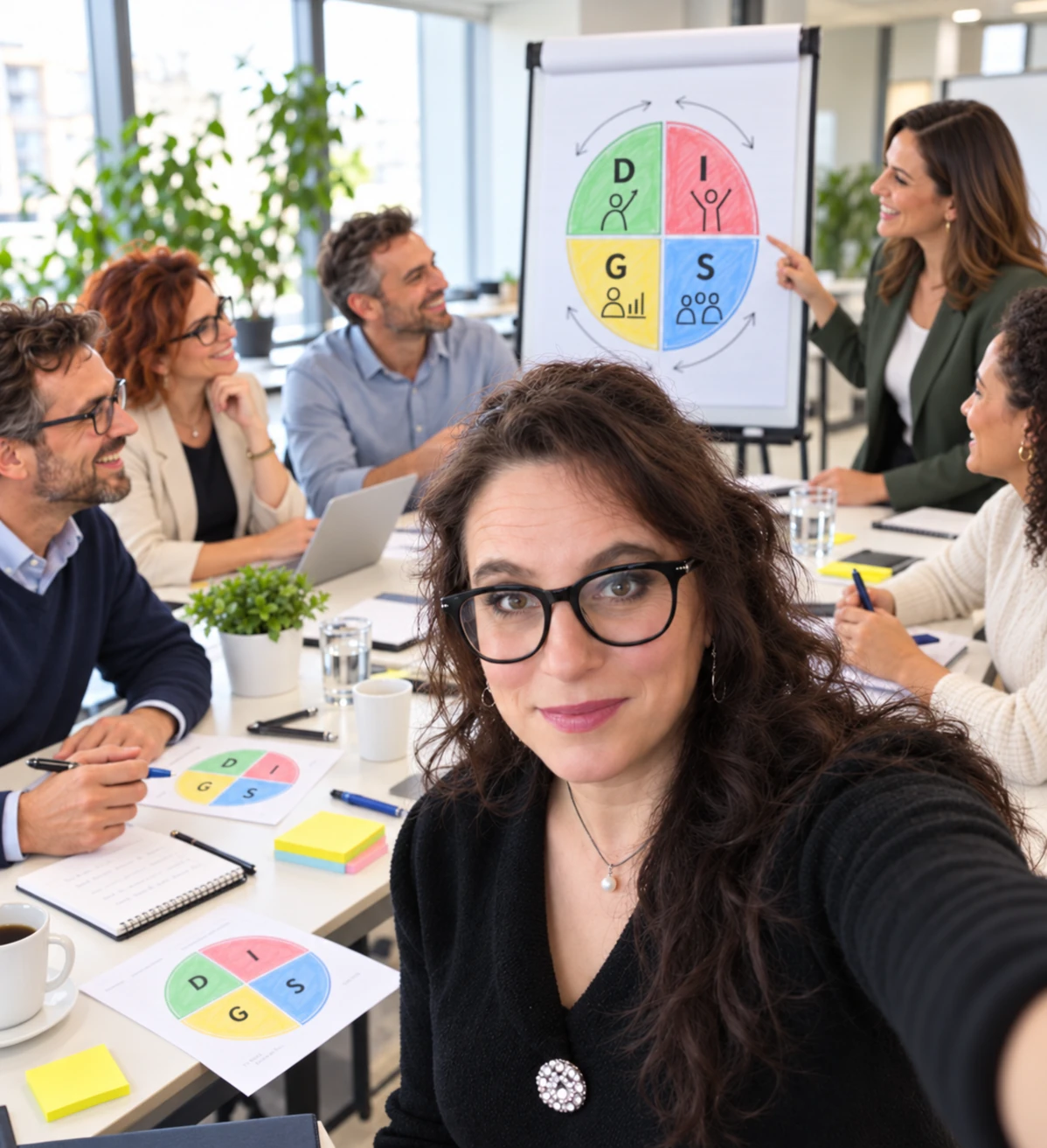
For sales and customer service, managers, employees and teams.
What feels clear and direct to one person can seem impatient to another. What one person considers thorough can feel cumbersome to someone else. The situations below are illustrative examples.
The customer is listening, but the message is not getting through.
The manager states a clear expectation. The employee understands something different.
Some people want quick decisions; others want all the facts first.
Well-intentioned feedback is received differently than intended.
DISC is a simplified model describing behavioural and communication preferences. The four perspectives help us notice differences and communicate more consciously.
People combine different behavioural preferences. DISC does not divide people into fixed categories. It is a tool for reflection and communication, not a clinical diagnostic instrument.
Adapt conversations and arguments to the person you are speaking to.
Communicate expectations and feedback more clearly.
Understand differences and combine strengths.
No pigeonholes. Instead, ask the right question:
What does the person I am speaking to need from me in this conversation?
Customer conversations, advisory work, leadership and collaboration are the focus. Input, reflection, exchange and practice support application in everyday work.
Practical focus: customer conversations, advisory work, leadership and collaboration. Respectful rather than manipulative.
Four learning steps connect knowledge of the model with situations from your everyday work.
Explore the four perspectives, strengths and limitations of the model.
Become more aware of your own behavioural and communication preferences and put feedback into context.
Reflect on and work through situations from customer conversations, leadership and collaboration.
Approach communication and influence more consciously – respectfully rather than manipulatively.
Complement the training with a personal DISC analysis and an individual debrief.
The personal analysis, including the one-hour conversation, is an optional extra booked and charged separately. It is not included in the one-day training price.
Price on request
Enquire about DISC analysisFour short questions for an initial look at your communication challenges.
No personal details. Answers stay on this page and are neither stored nor sent.
This quick check offers initial guidance. It is not a DISC personality test and does not assign you to a D, I, S or C type.
Your focus is customer conversations. DISC training can help you notice different communication preferences more consciously and adapt your conversations and arguments appropriately.
Your focus is leadership conversations. DISC training can help you communicate expectations more clearly and consider different communication needs.
Your focus is team communication. DISC training can help you notice different communication preferences more consciously and adapt your behaviour to the situation.
Your focus is feedback conversations. DISC training can help you formulate feedback more consciously and consider different perceptions during conversations.
How this guidance works: the area selected in question 1 determines the recommendation. Your situation, improvement goal and DISC experience from questions 2–4 provide context. There are no type assignments, percentages, scores or benchmarks.
For sales and customer service, managers, employees and teams.
Includes practical DISC training covering the content described. Personal DISC analysis is an optional extra and is charged separately. VAT treatment, group size, location and other organisational details will be clarified in a personal conversation.
24 years of consulting and training experience, according to Essential’s company profile. Practical skills development connects knowledge of methods with everyday situations. Respectful communication and lasting application are our aims.
Skills development goes hand in hand with a view of your processes.
Real challenges set the direction.
Reflection and development support application at work.
Clarity and practical implementation with the aim of improving performance.
Let us explore how DISC training could fit your employees and your organisation.
EVA talks to you by video and listens through your microphone. The call ends automatically after a few minutes.